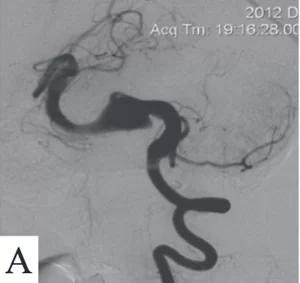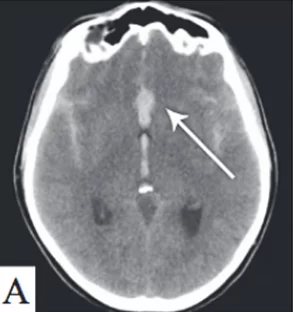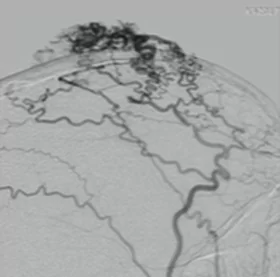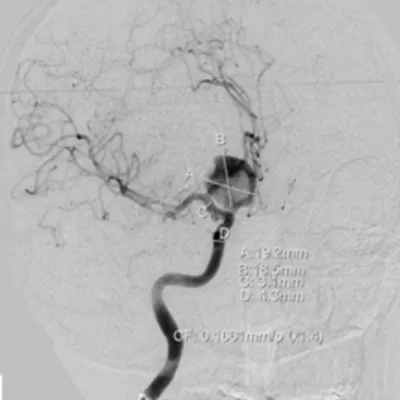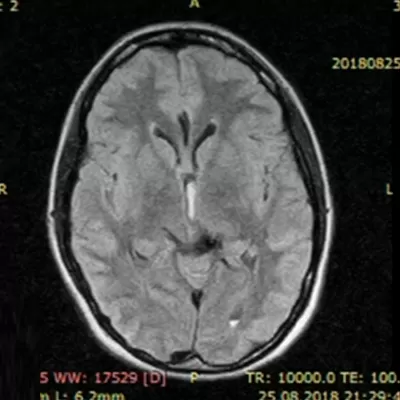
A case of treatment of an arteriovenous malformation in a pregnant woman
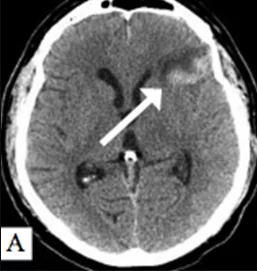
Patient Kh, 31 years old, was admitted to the Center on 03.01.2019 with complaints of periodic headaches. She was transferred to the…
Read all
Cerebrovascular diseases
Tumors & other treatment
Diagnostics
Patient Kh, 31 years old, was admitted to the Center on 03.01.2019 with complaints of periodic headaches. She was transferred to the…
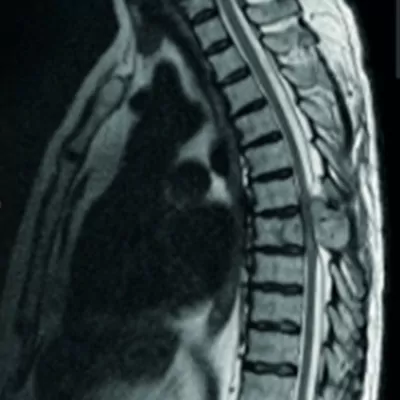
Read allSpinal tumors are often a factor that worsens the patient's quality of life. The desired clinical result (reduction of pain intensity, ensuring…
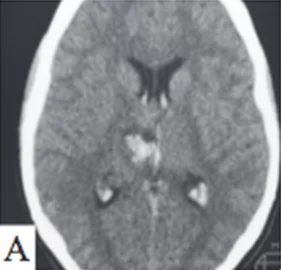
Read allTreatment of cerebral AVMs remains one of the greatest challenges in cerebrovascular neurosurgery. The advantages of surgery are radical removal of the…
Read allSpinal arteriovenous malformations (AVMs) are a heterogeneous group of non-neoplastic diseases representing an abnormal plexus in which arteries are directly connected to…
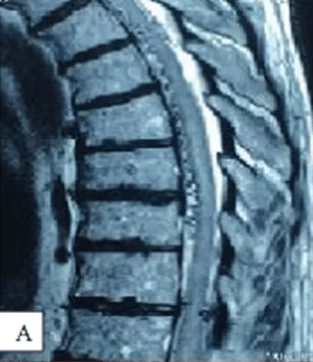
Read allPatient P., 47 years old, came to the Center complaining of progressive weakness in the legs, down to weak movements in them,…
Read allCerebral arteriovenous malformations (AVMs) occur in approximately 0.02 % of the adult population . AVMs are diagnosed predominantly in young and middle-aged…
Read allFusiform aneurysms (FA) account for 15 % of all arterial aneurysms . According to other data, FA occur in 3–13 % of…
Read allIn many population-based studies, the anterior cerebral — anterior communicating artery complex (ACA–ACoA) is the most common site of intracranial aneurysms .…
Read allH.P. Krayenbuhl and G. Yasargil, in a review of 800 cases of arteriovenous malformations (AVMs) from the literature and their own clinical…
Read allComplaints on admission: Loss of smell, loss of vision in the right eye, decreased vision in the left eye. Histology: Meningothelial meningioma…
Read allEndovascular treatment of intracranial aneurysms with detachable microcoils was first described in 1991 and has since become the main method of treating…
Read allComplaints on admission: gait disturbance, headache, dizziness, weakness. Neurological status: Clear consciousness, GCS 15. Pupils D=S. No cranial nerve pathology detected. No…
Read all