


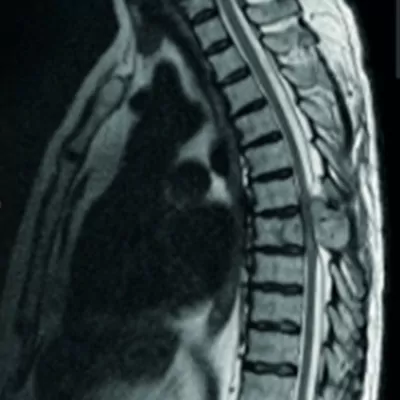
Spinal tumors are often a factor that worsens the patient’s quality of life. The desired clinical result (reduction of pain intensity, ensuring spinal stability) cannot always be achieved with conservative therapy and local irradiation. Since the goal of spinal surgery is not only removal of the lesion but also adequate decompression of neural structures, prevention of compression and ensuring spinal stability, hypervascularity of tumors located in the vertebral body or other vertebral structures increases the rate of perioperative complications and may make it impossible to perform the planned extent of surgery. Malignant tumors metastasize to the spine in 30–70 % of cases. Tumors of the breast, lung, prostate and kidney most often metastasize to the spine. Renal cell carcinoma is a hypervascular tumor. Our attention is also focused on the approach to treating aggressive spinal hemangiomas, which are the most common benign tumors of the spine. Spinal hemangiomas are usually asymptomatic; 3.7 % are symptomatic, and 1.0 % have neurological manifestations – aggressive hemangiomas that extend epidurally around the spinal cord and/or nerve roots, leading to myelopathy and radiculopathy respectively.
Despite the rarity of aggressive spinal hemangiomas, this pathology, although benign, can cause severe neurological deficit, lower paraplegia and pelvic organ dysfunction without proper decompression and stabilization. In aggressive hemangiomas with severe or rapidly progressing neurological deficit, surgical treatment is necessary.There are several surgical approaches to treating patients with aggressive spinal hemangiomas: decompression, gross-total resection, en bloc resection. Irradiation, embolization, vertebroplasty and ethanol injection are also used in combination with open surgery. Despite the variety of available treatment options, the optimal strategy is not clear-cut. Aggressive hemangiomas are uncommon, which makes large studies difficult . Surgery is performed to the extent of decompression and stabilization. Open surgery for hypervascular spinal tumors, in particular aggressive hemangiomas, is usually associated with massive blood loss that is life-threatening for the patient . In weakened patients with a burdened oncological history, the risk of postoperative complications related to blood loss is increased. Blood loss can be reduced by using preoperative intra-arterial embolization.


