


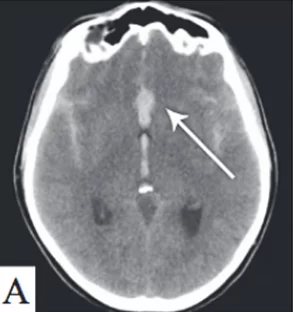
In many population-based studies, the anterior cerebral — anterior communicating artery complex (ACA–ACoA) is the most common site of intracranial aneurysms . These are the most complex aneurysms of the anterior circulation due to the specific angioarchitecture and hemodynamics of the ACA–ACoA region, frequent anatomical variations, deep interhemispheric location, and the risk of injuring perforating vessels with postoperative neurological deficit. Cognitive dysfunction and electrolyte imbalance are also common complications after microsurgical clipping of ACoA aneurysms, even among experienced neurosurgeons.
The main goal of clipping is complete occlusion of the aneurysm while preserving the patency of the artery and the perforators. The surgical trajectory should provide optimal visualization of the ACA–ACoA complex with minimal frontal brain retraction. The procedure requires an understanding of the 3D anatomy of the ACA–ACoA complex and its perforators, and not only technical skill but also meticulous dissection of the neck with repeated application of temporary and permanent clips. This is especially important in cases of complex, large and giant aneurysms.


